
Hatching Chicks
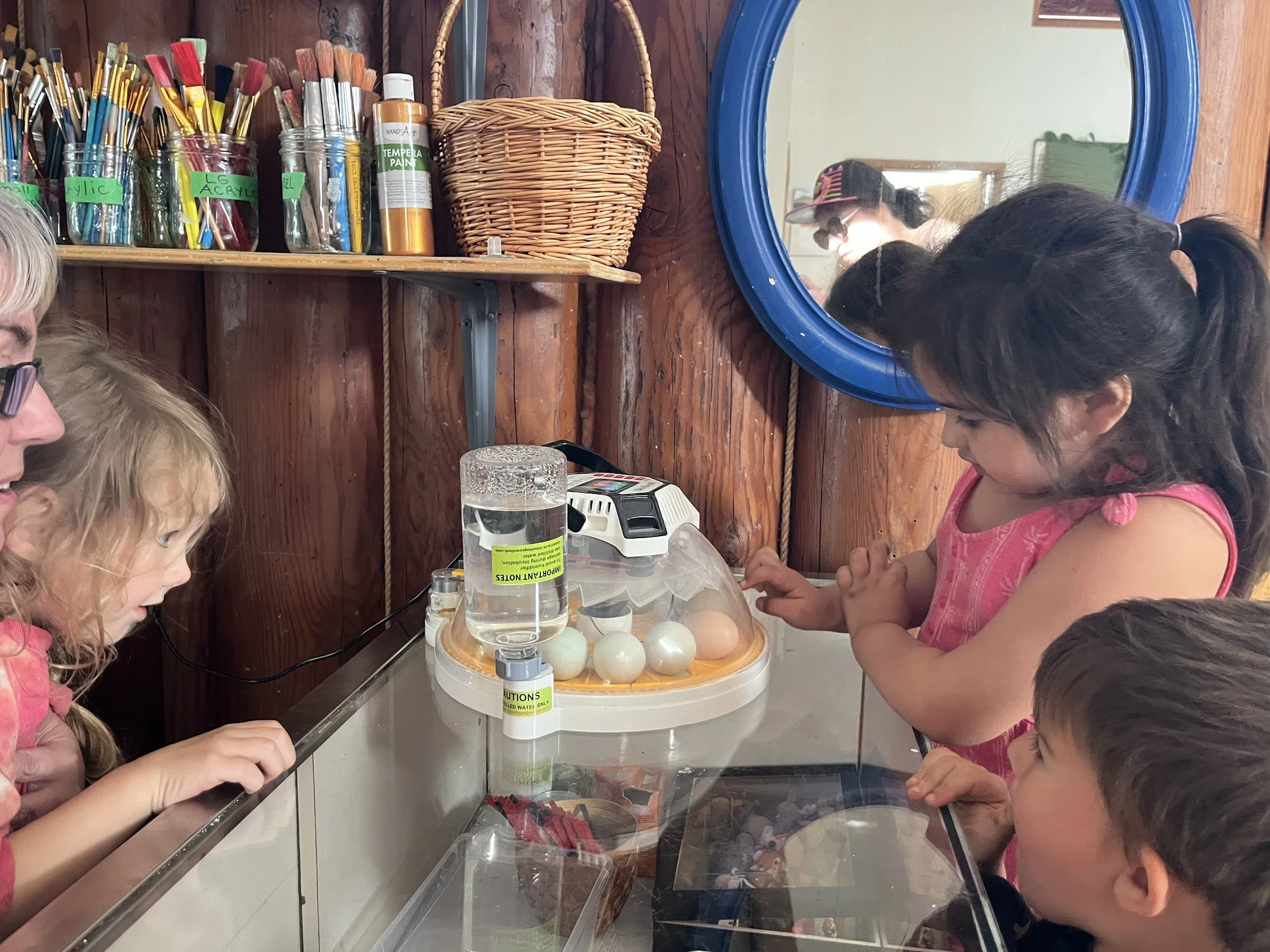
Each spring, hatching chicks has become one of the special rhythms of our preschool program. It is one of those experiences that quietly signals the changing season. The days are getting warmer, the garden is waking up, and inside the classroom there is a small incubator full of possibility.
This May, Blake’s mom, Katie, brought over her incubator and eleven beautiful chicken eggs. Over three weeks, we watched them closely as they developed, hatched, and grew. The children were fascinated by the different colours of the eggs and often wondered when they would hatch. We learned that chicks take about 22 days to hatch, so there was a lot of waiting, checking, wondering, and listening.
At first, not much happened. The eggs sat still and quiet in the incubator. After some days, we shone a light through the eggs to see the growing embryos inside. This is called “candling” the egg. The children were amazed to see that something was happening, even when it looked like nothing was changing from the outside.
Blake knew a lot about chicks. One day we saw tiny holes in some of the eggs and guessed they might start hatching the next morning. We were right. Nine out of eleven eggs hatched.
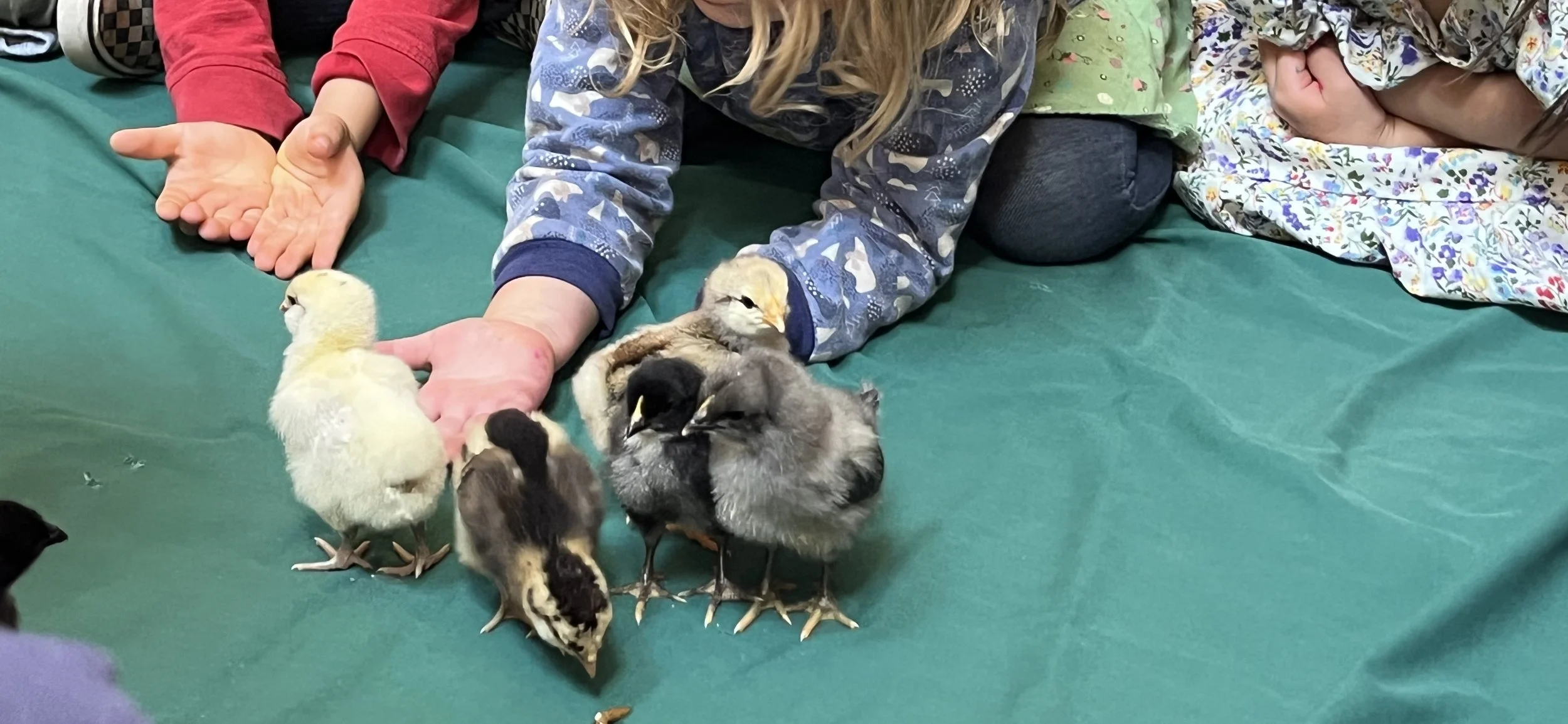
The chicks were kept in a bin with food, water, and heat for the first few days. The children quickly picked their favourite chicks. There was one particularly yellow chick that Soryn named Popcorn, and the children agreed that would become the bird’s name.
As joyful as this experience is, it also brings children close to the full cycle of life. Teachers were careful to let the children know that sometimes eggs do not hatch, and sometimes a chick may hatch but not be strong enough to stay alive. These things can be sad, and it is okay to feel sad.
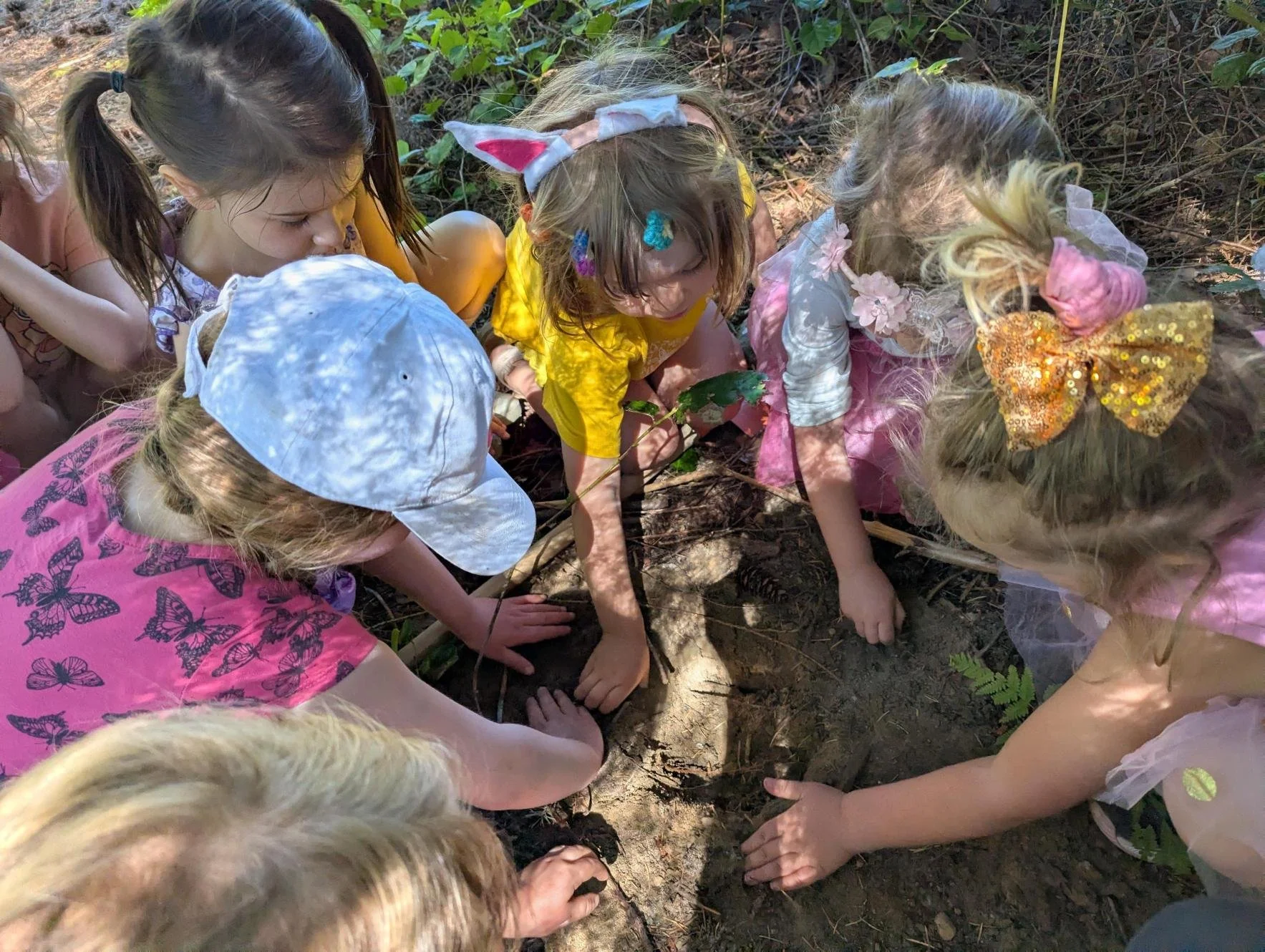
One day, one of the chicks was found dead. The children were thoughtful and quiet. They wanted to bury the bird, so we had a little funeral. They buried the chick in the same spot where we had buried the little black chick that died the year before. Some children still remember that chick and sometimes visit its grave. Lennon painted the bird marker that sits there.
We also read The Dead Bird by Margaret Wise Brown. The story gave the children a gentle way to talk about death. Some children shared their own experiences with the death of a loved person or a beloved animal. These conversations were quiet, honest, and meaningful.
The rest of the chicks kept growing. We took turns holding them and practiced being calm and gentle when they moved suddenly. The children noticed how soft and delicate they were, and how quickly they changed. As they grew, they also became messier and smellier, and we made sure to always wash our hands after handling them.
The chicks lived with us for a week before going back to Blake’s house. They left behind memories of tiny feet, fluffy feathers, excited peeping, patient waiting, careful listening, and many chances to wonder together.
Author: Raechel Norrgard